It’s summer, and patio dinners and park picnics are coming. What should be said about food safety to this audience of seasoned home cooks?
The first two of three bottom lines are that bacteria need time and temperature to grow and give off toxins. Keep these numbers in mind:
The “danger zone” wherein bacteria grow rapidly is 40 degrees F to 140 degrees F. In four hours of accumulated time in the danger zone, rapid growth of bacteria may occur.
Apply these data to a potato salad scenario for an off-site affair:
– The mayo is taken out of the fridge, mixed with Dijon mustard, diced olives, pickles, onions, lardons of bacon and set aside: 20 minutes
– Potatoes are peeled, cubed, boiled and set aside to cool: 20 minutes
– Eggs are hard boiled and set aside to cool: 20 minutes
– The salad is placed in the fridge to await the dinner event — it never cools to 40 degrees F: 60 minutes
– The salad is loaded into the car and makes the trip to the picnic — a two-hour affair: 60 minutes
– There is a good crowd, but plenty of potato salad for the late arrivals: 120 minutes
Add up the time in the danger zone and we get 5 hours. The late diners are at risk from the potato salad!
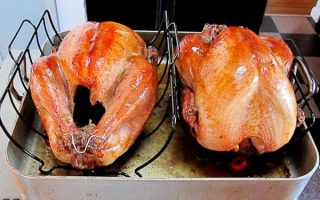
The third bottom line is “cross contamination” — that is, the transfer of harmful microorganisms from one item of food to another by means of surface contact (knives, boards and hands) or storage and thawing in contact with other food items. The villain here is salmonella, which is the source of most frequently reported foodborne infections. The heroes are space, soap and water. Prepare and store raw meat separate from other products and wash knives, steels, boards and hands upon completion. Cook meat to temperatures recommended by the USDA — poultry for sure (165 degrees F).